

AI Adoption Rises Among UAE Travellers, But Human Touch Still Matters

Travel technology is reshaping the sector, influencing how travellers plan, book, and experience their journeys. A new report by Tourism Economics for Arabian Travel Market (ATM) found that 60% of UAE travellers trust Artificial Intelligence (AI) to plan trips—significantly higher than the 48% global average. As digital tools become more integrated into daily habits, this figure is expected to grow.
The report highlights AI’s increasing role in planning trips to the Middle East, with nearly six in ten travellers using it for travel planning and 21% relying on it before their most recent trip. As adoption expands, AI is expected to offer more personalised recommendations and booking options, while also improving customer service and supporting business growth across the industry.

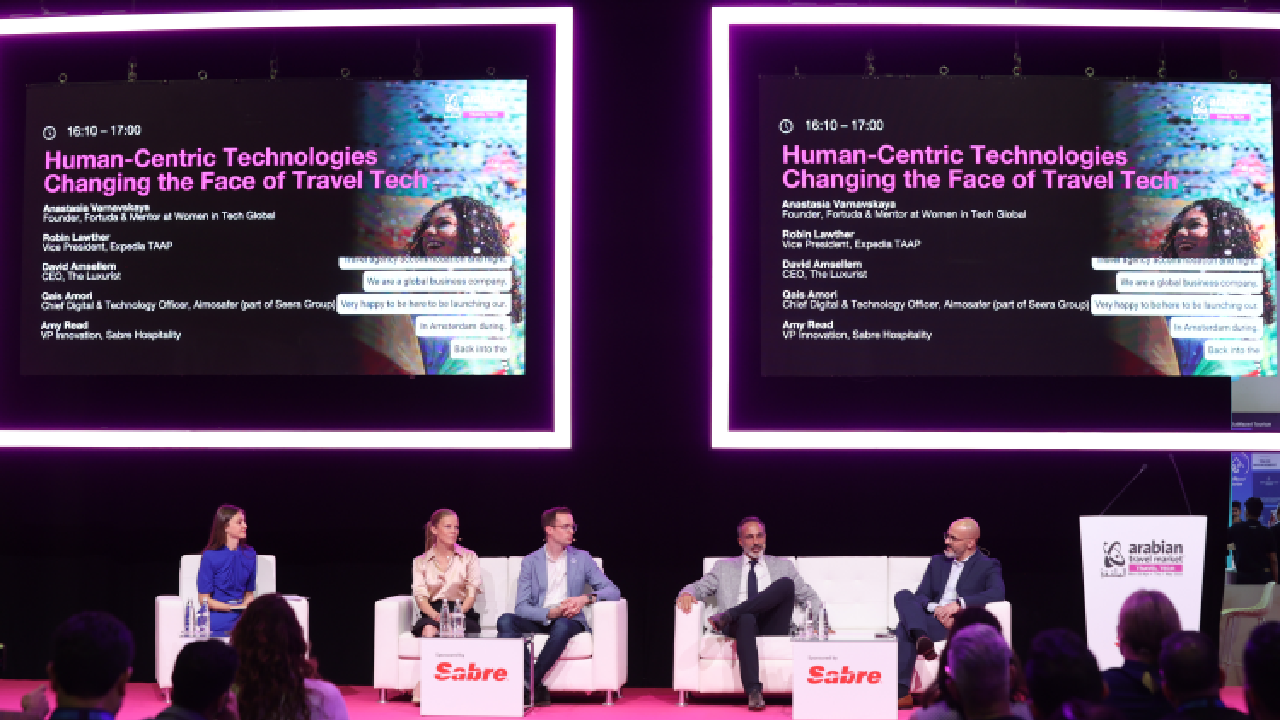
At ATM 2025, industry professionals from the technology, hospitality, and events sectors explored how digital transformation is influencing the balance between technology and human connection. The event highlighted how AI tools—ranging from service platforms to data-driven design—are becoming more common, raising questions about preserving meaningful guest interactions.

Amy Read, VP Innovation at Sabre Hospitality, noted: “Human connection is central to hospitality. Our focus is to enhance key moments rather than replace them. By freeing up staff time, technology allows for more intentional guest engagement.”
Read added that guest expectations have evolved, with travellers now seeking quicker responses. This shift has led to tools like SynXis Concierge AI, which uses generative AI to deliver timely, accurate responses around the clock, minimising reliance on individual staff expertise while maintaining service quality.
Other innovations include Miral’s AI concierge, Majd Al, featured at Yas Bay Waterfront and Ferrari World Yas Island in Abu Dhabi. It delivers tailored suggestions based on user preferences to enhance visitor experiences.

Panellists stressed that user-centred design is key. Platforms like Almosafer use customer feedback to build relevant tools, while Expedia TAAP develops technology in collaboration with travel agents to align features with real-world needs.
AI is also transforming the business events (MICE) sector, improving efficiency and insight. With the global meetings and events industry forecast to reach USD 945 billion in 2025 and surpass USD 2.3 trillion by 2032, demand for scalable, intelligent tools is growing. AI now plays a role in event personalisation, automating logistics, translating content, and tailoring experiences.

Despite these advancements, speakers cautioned against letting technology dilute authenticity. While AI improves operations and customisation, it also redefines roles, encouraging hospitality businesses to shift human effort toward high-value, guest-focused interactions.

Danielle Curtis, Exhibition Director ME, Arabian Travel Market, concluded: “The most effective travel technologies are those that support human interaction, improve processes, and respond to real customer needs. Placing people at the centre of innovation is key to long-term success.”
Reflecting the sector’s growing emphasis on digital transformation, ATM Travel Tech 2025 saw a 26% increase in showcased products. ATM 2026, scheduled for 4–7 May, will continue to spotlight emerging technologies shaping the future of travel.












Leave a comment