

Binita Singh of WAE F&B on Redefining Sustainable Water Solutions in Hospitality
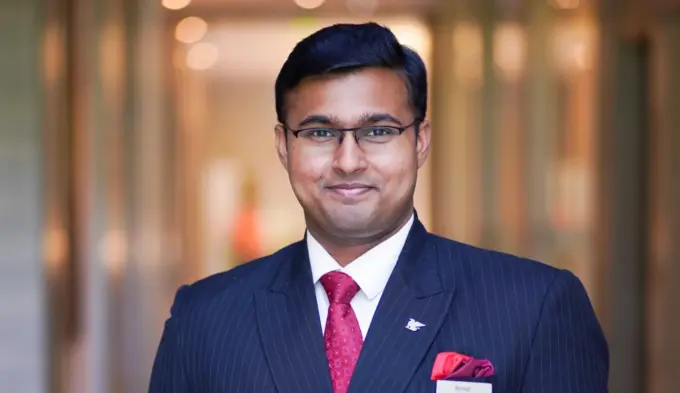
In an exclusive conversation with Priyal Dutta, Senior Correspondent, Safari India, Ms. Binita Singh, Head – Brand Advocacy at WAE F&B, shares her perspective on the evolving sustainability landscape in the hospitality sector.
She discusses the growing shift towards circular water systems, the challenges associated with single-use plastics, and how technology-driven solutions are helping hotels reduce costs, carbon footprint, and operational inefficiencies while enhancing the overall guest experience.

Priyal: How do you see sustainability priorities in the hospitality sector evolving over the next five years?
Binita: Over the next five years, sustainability in hospitality will move from “green initiatives” to measurable operating discipline. Hotels will be expected to quantify energy, water, waste, carbon emissions and plastic reduction, not merely communicate intent. WTTC’s Hotel Sustainability Basics already defines core actions around measuring and reducing energy, water, waste and carbon, and replacing plastic water bottles and single-use amenities.
In India, this will be accelerated by ESG reporting, guest expectations, brand standards and cost pressure. Water will become central: not only water conservation, but water quality, reuse, recycling, intelligent monitoring and circular consumption models. Large Indian hotel groups are already setting targets such as 100% wastewater recycling, reduced freshwater use per occupied room and renewable energy transition.

Priyal: What are the biggest operational and environmental challenges associated with single-use plastic water bottles in hotels today?
Binita: Single-use PET bottles create a threefold problem: procurement complexity, waste burden and carbon footprint. Hotels consume bottled water across rooms, banquets, restaurants, gyms and events, which means daily inward logistics, storage, inventory control, vendor dependence and disposal handling.
Environmentally, PET bottles are problematic because they are resource-intensive, fossil-derived and rarely part of a truly circular loop. UNEP’s life-cycle work on single-use plastic bottles shows that bottle impacts must be assessed across raw materials, production, transport, use and end-of-life, not merely disposal.
The challenge is magnified in tourism-heavy destinations, where plastic waste spikes with occupancy and events. Recent research notes that hospitality generates significant solid waste globally, with single-use plastics forming a major fraction of short-life packaging waste.
Priyal: How are in-house Glass Bottling Plants helping hotels reduce both costs and carbon emissions?
Binita:In-house Glass Bottling Plants convert water from a purchased consumable into a controlled, on-site hospitality utility. A hotel purifies, mineral-balances, sterilizes, bottles and serves water in reusable glass bottles within its own premises. WAE’s systems are described as integrating purification, bottle rinsing, filling, capping and quality inspection.
The cost benefit comes from reduced dependence on external bottled-water suppliers, lower logistics, lower storage burden and better demand-linked production. Hospitality reports note that hotels adopting such systems see reduced procurement and transport costs, improved inventory control and lower lifecycle cost per bottle after capital absorption.
The carbon benefit comes from eliminating repeated PET bottle production, secondary packaging and transportation. The most credible framing is “carbon reduction” or “low-carbon water service”; “carbon neutral” should be used only where independently calculated and offset/validated.
Priyal: Could you elaborate on the impact WAE partnerships with Club Mahindra and Westin Hotels & Resorts have delivered so far?
Binita: Publicly available reporting indicates that WAE partnership with Club Mahindra has supported the shift from PET bottled water to in-house glass bottling across resorts, eliminating single-use plastic bottles from guest rooms and dining areas and replacing them with branded reusable glass bottles.
For Westin properties, published hospitality coverage cites The Westin Gurgaon and The Westin Sohna as examples where in-house glass bottling units are being used for rooms, restaurants and banqueting. Reported outcomes include reduced supplier dependence, lower logistics, better inventory control, improved water-quality oversight and enhanced premium presentation.
Where exact cumulative impact figures are required—bottles avoided, kilograms of plastic reduced, CO₂e saved, cost-per-liter reduction—these should ideally be presented through audited property-level data.
Priyal: How receptive are hotel brands in India towards adopting circular water solutions and sustainable infrastructure?
Binita: The receptiveness is now materially stronger than it was five years ago. Indian hospitality has moved beyond symbolic sustainability towards operational infrastructure: wastewater recycling, renewable energy, EV transition, plastic elimination and water-efficiency systems. Oberoi’s 2030 targets, for example, include recycling 100% wastewater and reducing freshwater consumption per occupied room by 20%.
Club Mahindra’s move towards plastic-free resorts and glass-bottled water shows that circular water solutions are no longer experimental; they are becoming brand-standard interventions in premium hospitality.
Priyal: Beyond sustainability, how do these systems enhance the overall guest experience?
Binita: Glass bottling improves the guest experience in three ways: aesthetics, trust and wellness. A well-designed glass bottle feels more premium than disposable PET. It aligns with luxury cues—clarity, weight, branding and table presentation. It also reassures guests that the hotel controls purification, hygiene and quality at source.
For wellness-led hospitality brands, water is no longer a background amenity. It becomes part of the property’s promise: safe, fresh, local, plastic-free and responsibly served.
Priyal: What role will technology and intelligent water systems play in shaping sustainable hospitality in India?
Binita: Technology will be decisive. The next phase will involve intelligent water systems that combine purification, mineral balancing, UV/ozone disinfection, IoT monitoring, consumption analytics, predictive maintenance and quality traceability. This allows hotels to monitor water as a strategic resource rather than a back-office utility.
India’s water infrastructure is already moving from a supply-centric model to an integrated sustainability model involving wastewater recycling, digital monitoring, desalination and resource resilience.
Priyal: What is WAE’s larger vision for driving sustainable transformation across industries in India?
Binita: WAE’s larger vision is to make water infrastructure measurable, circular and intelligent across hospitality, workplaces, institutions, manufacturing and public environments. The company’s proposition is not only to replace plastic bottles, but to redesign how organizations produce, serve, monitor, reuse and account for water.
For hospitality industry, the immediate mission is clear: help hotels move from disposable water to circular water. For India, the larger ambition is more strategic: to make sustainable water systems as fundamental to infrastructure as energy efficiency, digital control and carbon accounting have become.










Leave a comment