


IATA Releases 2025 Aviation Safety Report

The International Air Transport Association (IATA) has published its 2025 Annual Safety Report, outlining aviation safety performance across global airline operations during the year.
According to the report, the all-accident rate in 2025 stood at 1.32 accidents per million flights, equivalent to one accident for every 759,646 flights. This represents an improvement from 1.42 accidents per million flights in 2024, though it remains slightly higher than the five-year average of 1.27 recorded between 2021 and 2025.
Airlines operated 38.7 million flights in 2025, during which 51 accidents were recorded. This was fewer than the 54 accidents reported in 2024, although still above the five-year average of 44 accidents.
The report recorded eight fatal accidents in 2025, compared with seven in 2024 and a five-year average of six. A total of 394 fatalities were reported in 2025, higher than 244 fatalities in 2024 and the five-year average of 198.

Willie Walsh said aviation continues to maintain a high level of safety performance, though every accident highlights the importance of continued improvements in safety standards and collaboration across the industry.
Walsh noted that the five-year rolling average for fatal accidents has improved over the past decade. Between 2012 and 2016, there was approximately one fatal accident for every 3.5 million flights. Between 2021 and 2025, the rate improved to one fatal accident for every 5.6 million flights.
Operational Safety Trends

The most frequently reported accident types in 2025 included tail strikes, landing gear events, runway excursions and ground damage. These incidents typically occur during take-off, landing and ground operations, highlighting the importance of continued attention to these phases of flight.
Notably, no loss-of-control inflight (LOC-I) accidents were recorded in 2025, marking only the second time this has occurred since 2020. LOC-I events are historically associated with a higher proportion of fatal accidents.
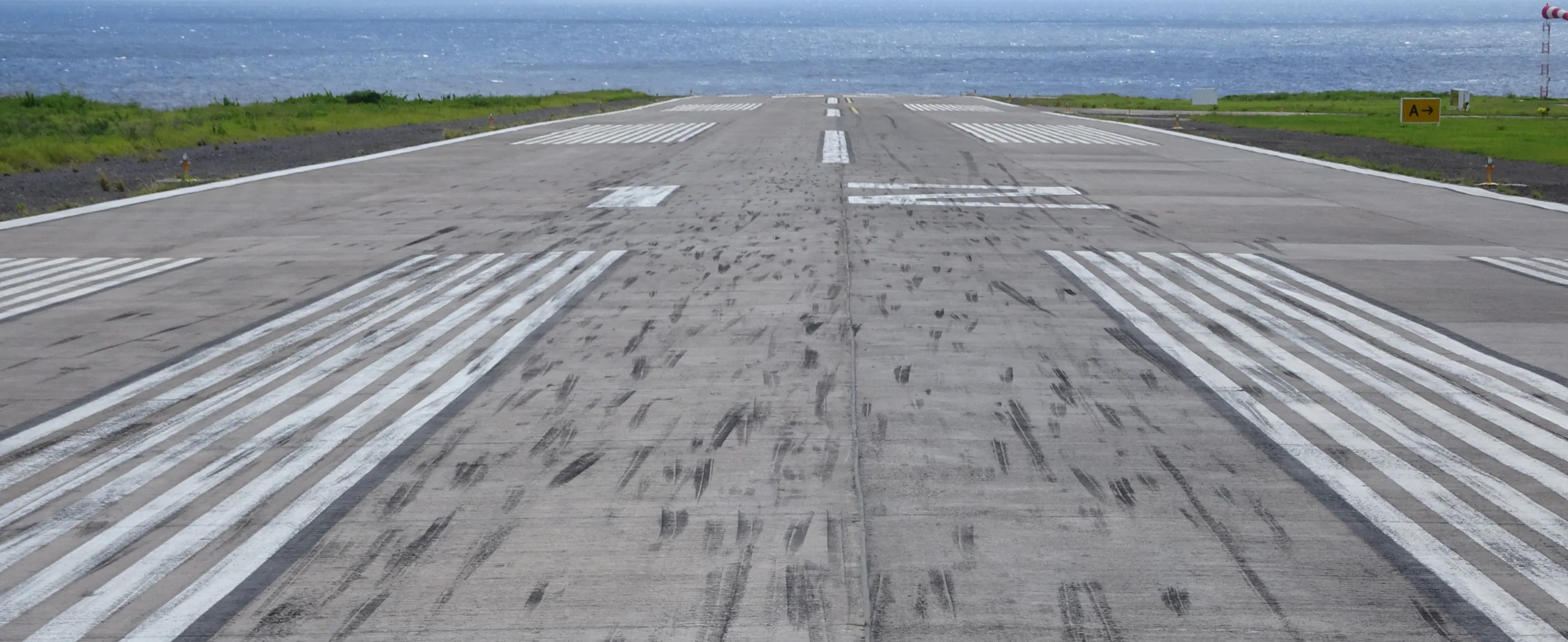
Airport infrastructure was identified as a contributing factor in 16% of accidents in 2025. According to IATA, this underscores the importance of maintaining runway safety areas, ensuring proper lighting and markings, and managing hazards such as runway contamination or obstacles near operational areas.
Walsh also noted that obstacles near runways, in some cases, increased the severity of accidents, emphasising the need for airports and regulators to maintain compliance with international safety standards.
Safety Performance and Industry Standards

Airlines listed on the IATA Operational Safety Audit (IOSA) registry recorded an all-accident rate of 0.98 per million flights, significantly lower than the 2.55 rate for non-IOSA airlines.
Similarly, IATA member airlines recorded an accident rate of 0.72 per million flights, compared with 3.09 for non-IATA carriers.
The fatality risk, which measures the likelihood of passenger fatalities per flight, increased to 0.17 in 2025, compared with 0.06 in 2024 and a five-year average of 0.12. A small number of accidents accounted for a large share of the fatalities reported during the year.
Regional Safety Performance

The report also analysed accident rates across different regions.
In Africa, seven accidents were recorded in 2025. The accident rate improved compared with 2024 but remained higher than in other regions. Many of the incidents involved turboprop aircraft and runway excursions.
The Asia-Pacific region reported six accidents in 2025, with the accident rate improving compared with the previous year. The most common incident types were ground damage and tail strikes.
In Europe, 11 accidents were recorded, while the region’s fatality risk remained at zero in 2025.
The Middle East and North Africa region reported one accident in 2025, involving a runway excursion, and has recorded no fatalities since 2019.
North America recorded sixteen accidents in 2025, with the most common incident types being ground damage and tail strikes.
Conflict Zones and Airspace Safety

The report also addressed the operational risks posed by conflict zones. Increasing geopolitical tensions in some regions have led to airspace restrictions, route changes and operational challenges for airlines.
IATA highlighted the importance of coordination between civil aviation authorities and military organisations to ensure that airlines receive timely information on potential risks. Governments are responsible for restricting or closing airspace when safety cannot be assured.
Walsh said civil aircraft must not be exposed to risks from military activity and emphasised the need for clear communication, coordination and transparent decision-making when managing airspace during periods of conflict.
Rising Concerns Over GNSS Interference
The report noted a significant increase in Global Navigation Satellite System (GNSS) interference, which can disrupt aircraft navigation systems.
Data from IATA’s Incident Data eXchange shows that reported signal jamming events increased by 67% between 2023 and 2025, while GPS spoofing incidents rose by 193% during the same period.
Walsh said airlines rely heavily on GNSS systems for navigation and operational efficiency. While aircraft systems include redundancies to maintain safe operations, governments and air navigation service providers need to improve the monitoring and mitigation of interference events.
Accident Investigation and Safety Learning

The report also raised concerns about delays in accident investigation reporting. IATA analysis of investigations conducted between 2019 and 2023 found that 63% of accident reports were completed in accordance with timelines under the Chicago Convention.
Investigation completion rates varied by region, with the Commonwealth of Independent States reporting the highest completion rate at 81%, followed by North America (78%), Europe (75%), and Asia-Pacific (68%). Lower completion rates were recorded in other regions.
Walsh noted that accident investigations provide important safety insights for the aviation sector. Delayed or incomplete reports limit the industry’s ability to learn from incidents and implement improvements.
To support transparency and improve access to safety information, IATA has developed a centralized platform that compiles safety recommendations from accident investigation reports. The system allows airlines, regulators and aviation organisations to review data and identify patterns that may help prevent future incidents.
















Leave a comment