

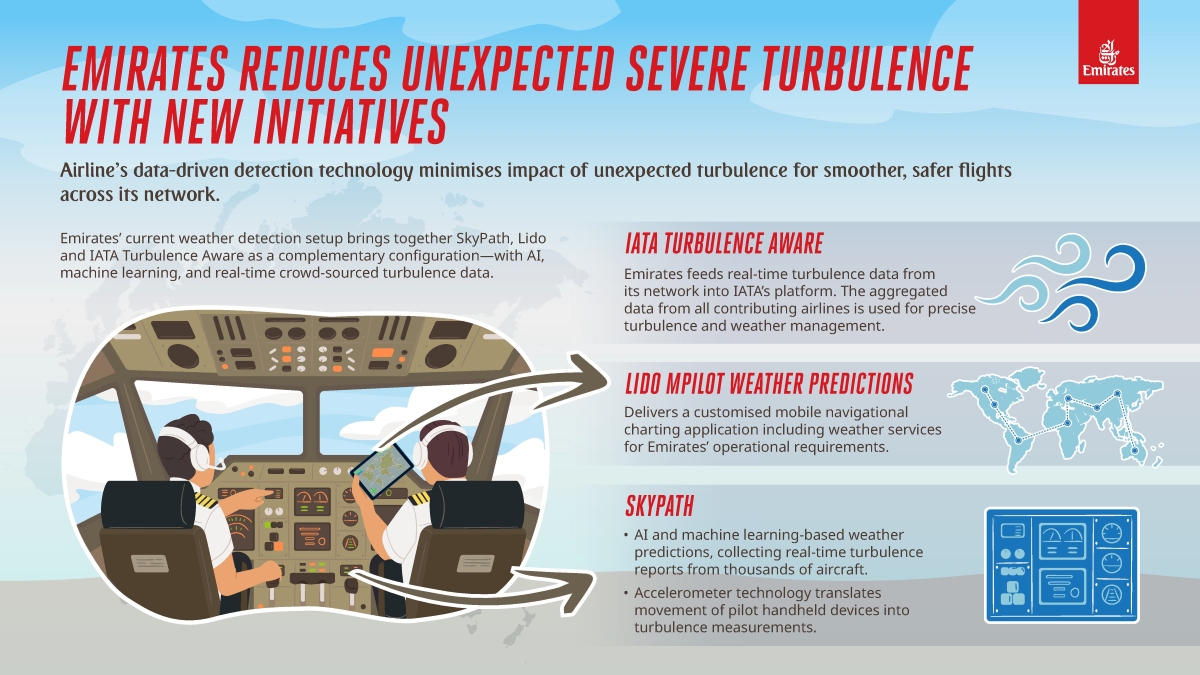
Emirates Enhances Flight Planning to Reduce Unexpected Turbulence Encounters
As turbulence becomes an increasing concern for global aviation, Emirates has adopted a data-driven strategy to plan smoother flights and minimize unexpected turbulence encounters across its network.
The airline’s multi-layered approach integrates multiple data sources and technologies to provide real-time, accurate turbulence information. These initiatives, introduced last year, have contributed to fewer instances of unexpected severe turbulence, improving passenger and crew comfort and operational efficiency.

Captain Hassan Alhammadi, Divisional Senior Vice President, Flight Operations at Emirates, said: “Turbulence remains a continuing operational challenge, but we are committed to minimising unexpected severe encounters by working with partners who apply advanced technology and AI to enhance flight safety. While turbulence cannot be completely avoided, these efforts are already showing measurable progress.”
Emirates’ system integrates SkyPath, Lido mPilot from Lufthansa Systems, and IATA Turbulence Aware, combining AI, machine learning, and pilot-reported data to enhance prediction accuracy:
SkyPath: Uses AI- and machine learning-based weather analytics to identify turbulence areas, integrating real-time reports from thousands of aircraft. The platform combines data from Eddy Dissipation Rate (EDR), ADSB transponders, and accelerometer readings to provide pilots with practical turbulence insights.
Lido mPilot Weather Predictions: Offers navigational and weather data through Emirates’ partnership with Lufthansa Systems, including real-time cloud, convection, and turbulence reports for enhanced situational awareness.
IATA Turbulence Aware: Enables Emirates to both contribute and access real-time global turbulence data, supporting informed decision-making in the cockpit and collaboration across the aviation sector.
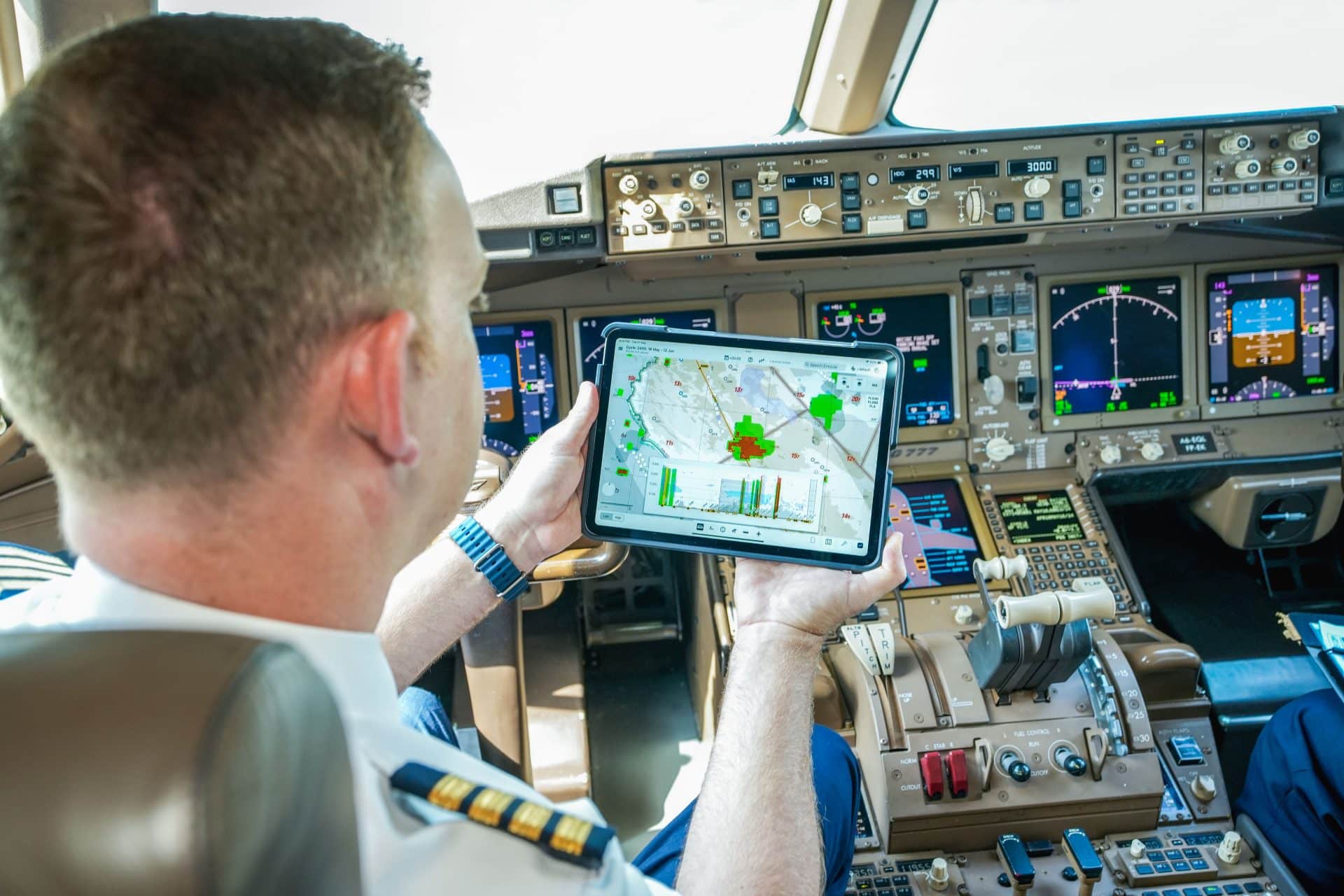
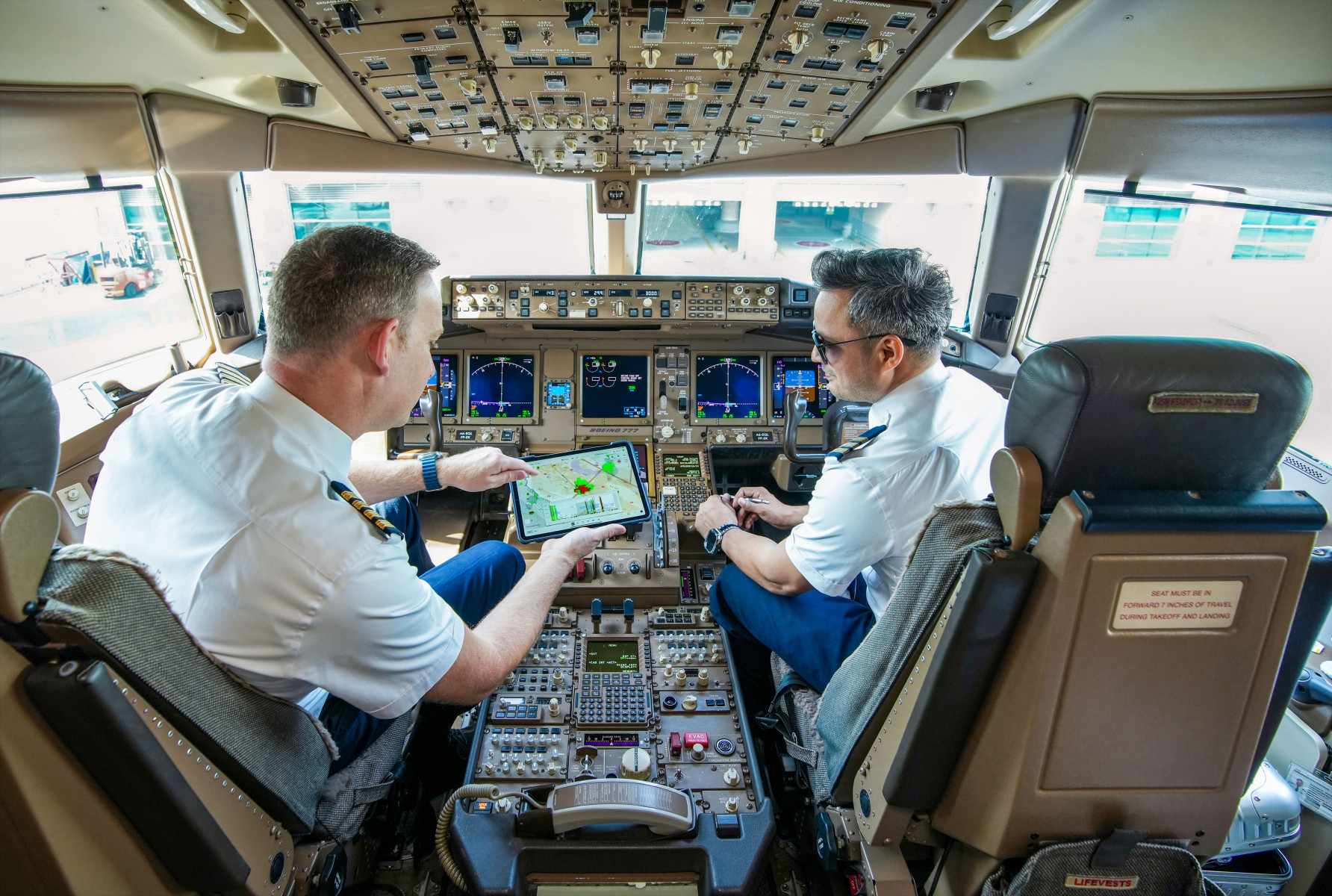
By integrating these tools into its electronic flight bag charting application, Emirates provides pilots with live turbulence visualisations that support proactive flight adjustments. This collaborative approach aims to strengthen operational safety, efficiency, and passenger experience.















Leave a comment