


TTF 2026 Highlights Thailand Tourism Challenges as Regional Competition Grows
Thailand’s tourism industry is entering a period where market shifts and stronger regional competition are increasing pressure on the country to adjust its strategy. As travel behaviour evolves and neighbouring destinations invest in new infrastructure and tourism capacity, Thailand needs to respond with new approaches to protect its position in the Asia-Pacific tourism landscape.
For many years, Thailand has remained one of the region’s most visited destinations. However, recent performance indicates changing momentum across Southeast Asia. Thailand’s international arrivals declined by 7.2% in 2025, while Vietnam recorded growth of 20.4%, supported by changes in Chinese outbound travel patterns, improved connectivity and continued infrastructure development.
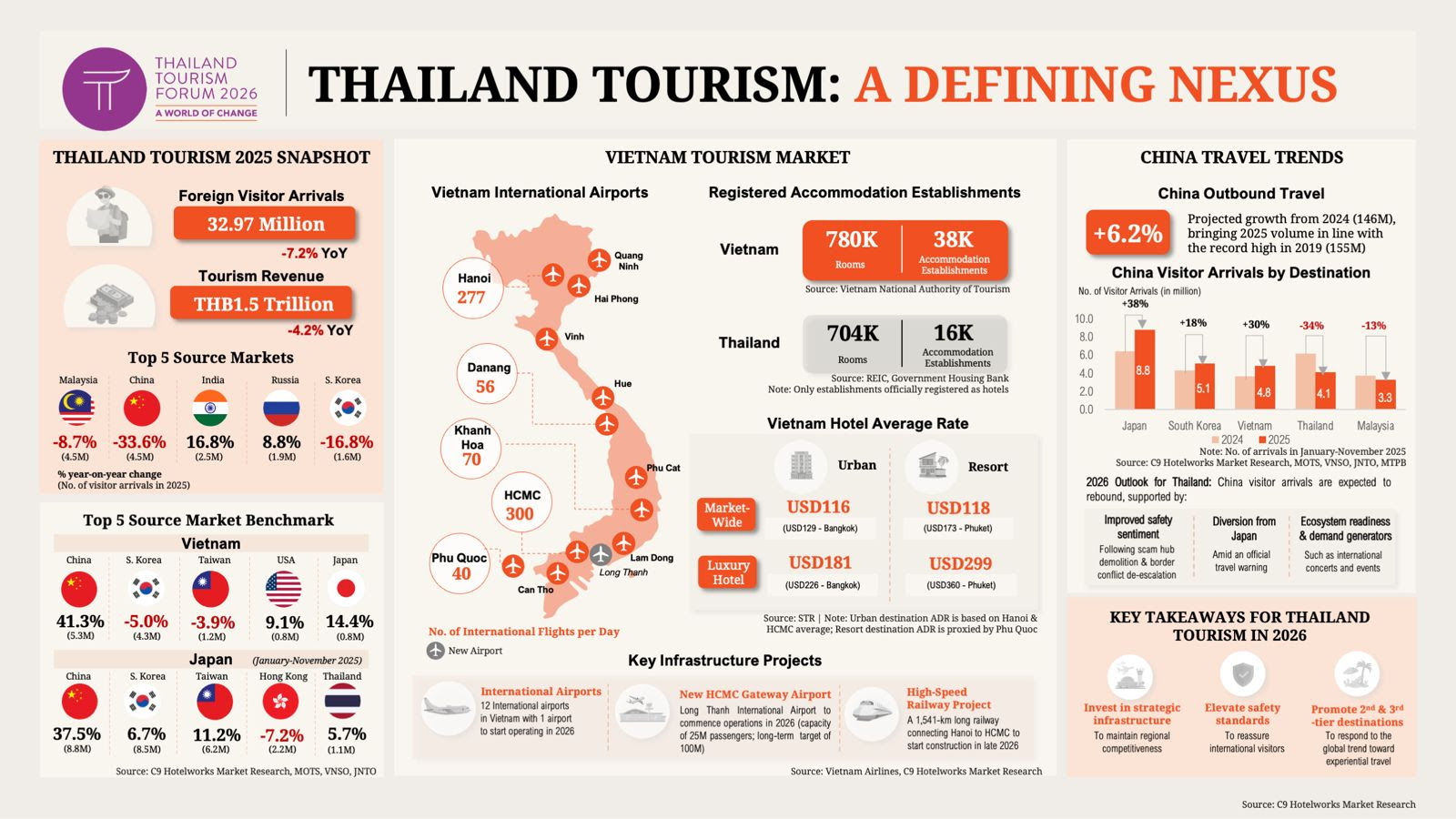
Vietnam’s expansion plans could further strengthen its tourism competitiveness. The country is reportedly planning 12 new airports, a proposed high-speed rail network, and a growing hotel development pipeline, indicating a long-term strategy to capture a larger share of regional and international travel demand.
Bill Barnett, Managing Director of C9 Hotelworks, said: “Thailand’s tourism industry stands at a critical juncture—where strategy matters more than scale. This is no longer a recovery phase; it is a reckoning. Regional competitors are investing billions, and Thailand cannot rely on past success. The choices made now will define the next decade.”
Despite the challenges, industry leaders continue to view Thailand as a destination with strong underlying demand, both for leisure travel and longer-term stays. At the same time, there is increasing emphasis on the need for fresh product development, new experiences, and broader destination planning to attract global travellers.
Phoom Chirathivat, Managing Partner and Co-Head of Central Group Capital and Head of Hotels and Alternative Investments at Central Pattana (CPN), said: “As an investor I am of course cautiously optimistic. Cautious due to global uncertainty, and issues related to geo-politics and security. Regionally there’s more competition and locally the economy is not good. But I am very optimistic in a country where cultural depth and diversity offer a gold mine to create high-value products.”
He also highlighted the importance of looking beyond Thailand’s major tourism hubs, such as Phuket, Koh Samui, Pattaya, and Chiang Mai, and of expanding tourism activity into emerging regions. He pointed to Esarn in the north-east, known for its food and cultural experiences, as well as Nakhon Sri Thammarat on the south-east coast, which has long stretches of natural coastline and opportunities for lower-density tourism development.
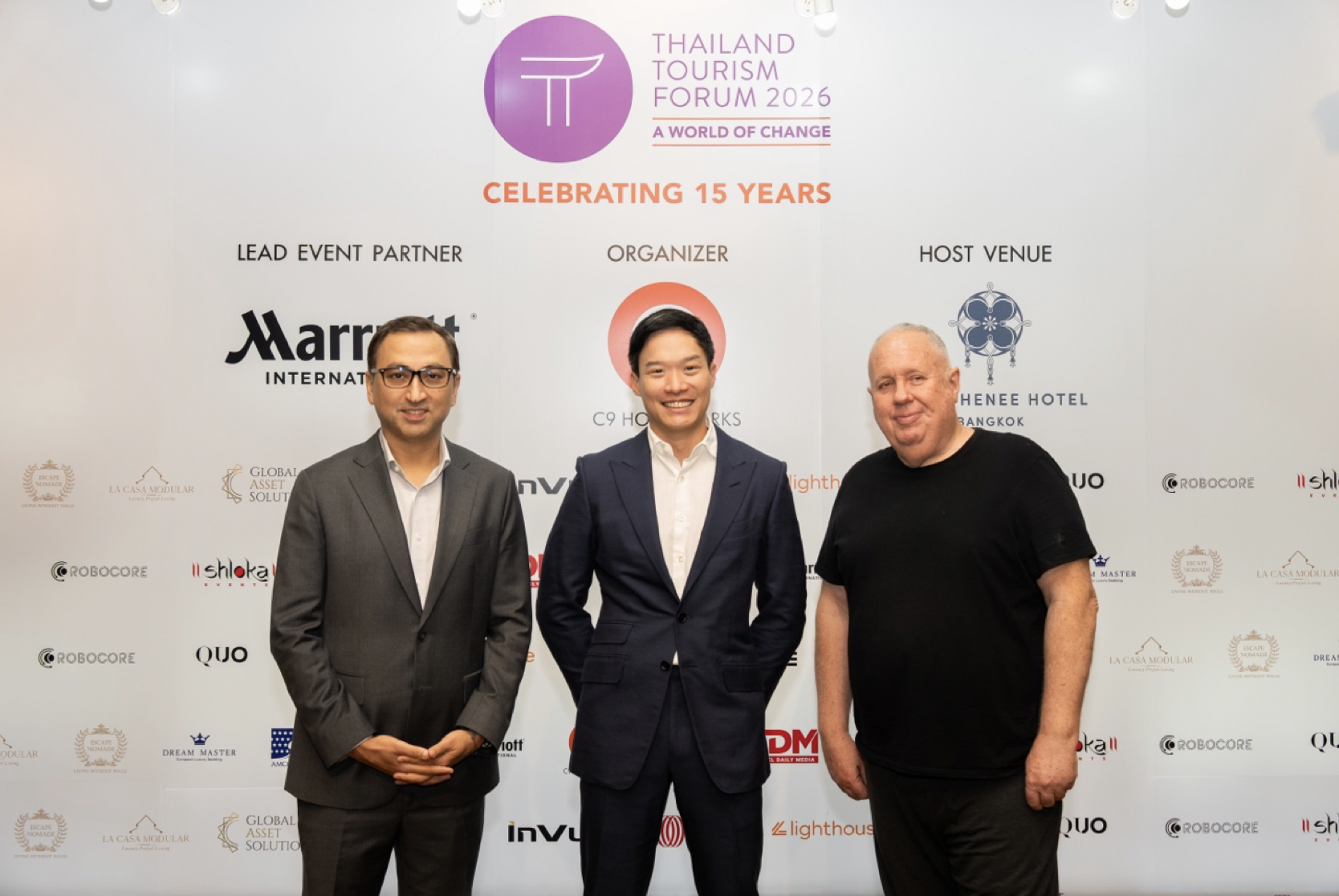
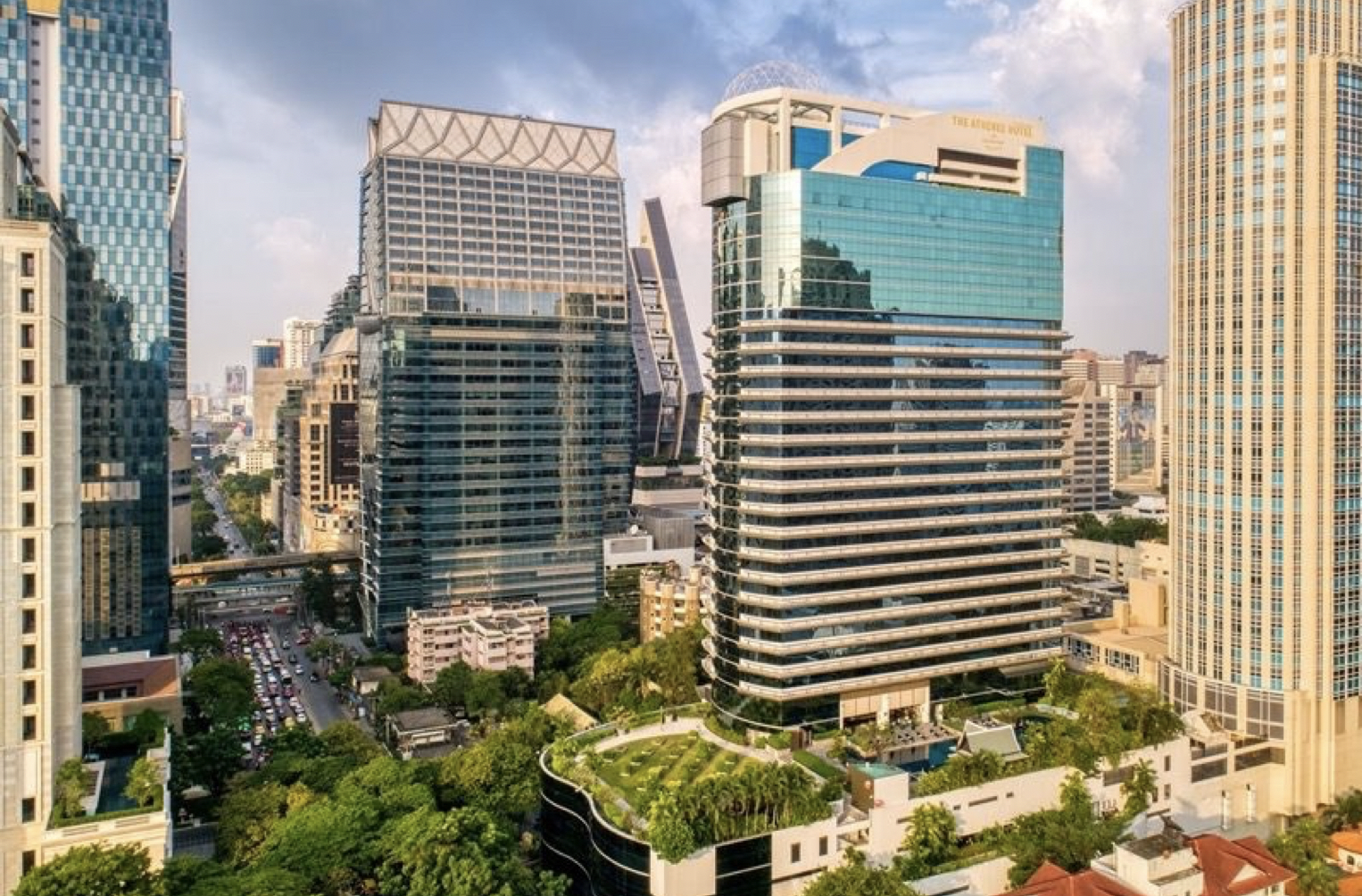
These discussions took place during the 15th edition of Thailand Tourism Forum (TTF) 2026, organized by C9 Hotelworks and hosted at The Athenee Hotel, a Luxury Collection Hotel, Bangkok. The event brought together around 1,000 senior hospitality professionals, including hotel operators, developers, owners and tourism executives, under the theme “A World of Change.”















Leave a comment