

End of Lent Festivals Illuminate Thailand’s Spiritual Traditions
As the monsoon rains recede and the rice fields deepen in colour, a distinct spiritual atmosphere emerges across Thailand’s regional provinces. This marks the period of Ok Phansa (literally “leaving the rains retreat”) — the full-moon day of the eleventh lunar month, signalling the end of Buddhist Lent (Vassa). Also known as the End of Lent festivals, this period offers travellers insight into Thailand’s living Buddhist traditions, especially for those visiting in October.
During Vassa, monks observe a period of retreat within their temples for spiritual practice. Ok Phansa commemorates the completion of this retreat and, according to Buddhist tradition, marks the day the Buddha descended to earth from Tavatimsa Heaven after preaching to his mother for three months. For lay communities, it is a time of merit-making and collective reflection.
Tak Bat Thewo in Uthai Thani
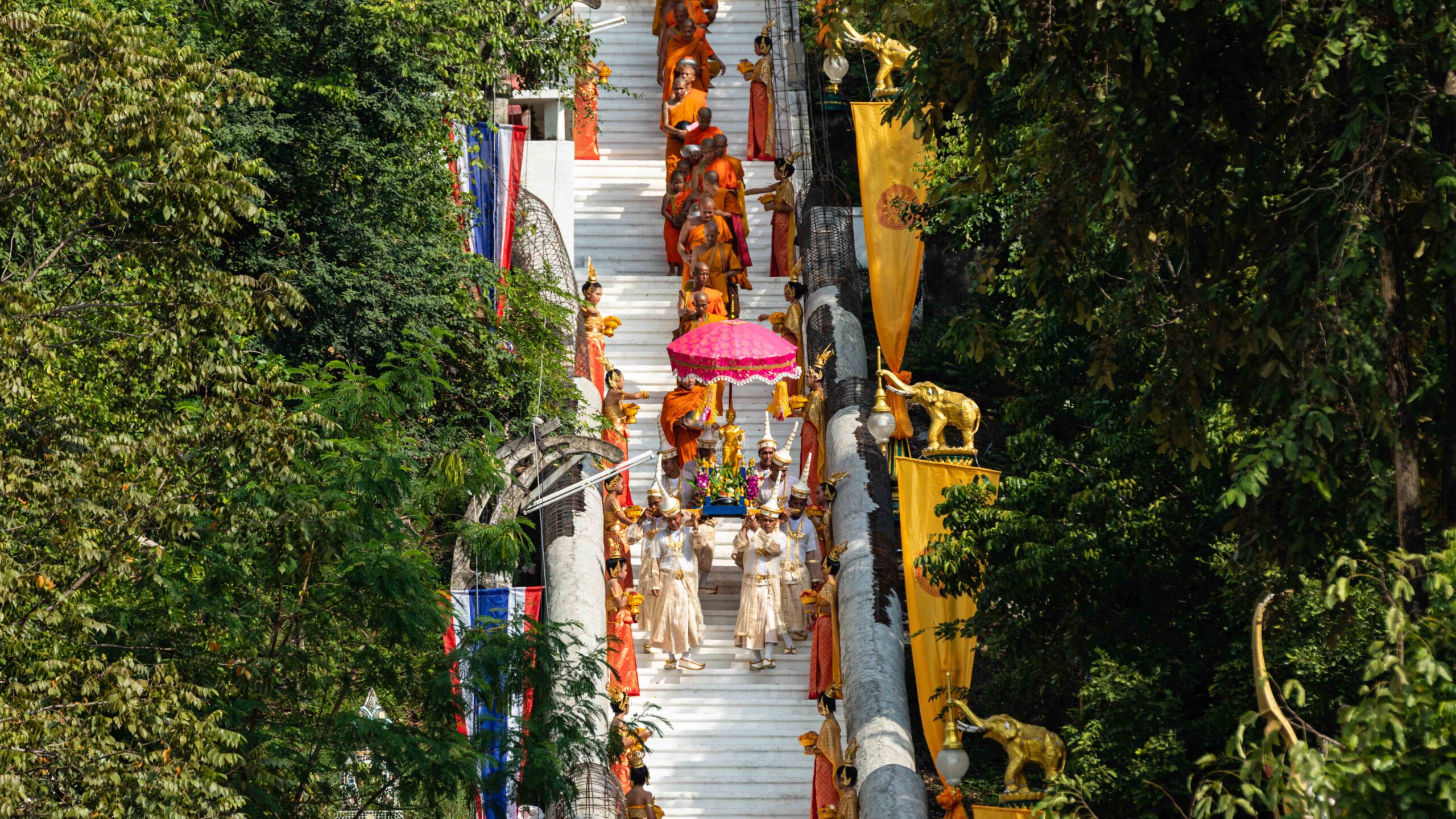
The day after Ok Phansa features the Tak Bat Thewo alms-giving ceremony, particularly observed in Uthai Thani Province. Monks descend a decorated staircase from a hilltop shrine to receive alms from devotees waiting below, symbolising the Buddha’s descent from heaven. This ritual combines spiritual devotion with community participation, reaffirming the connection between the monastic community and the broader community.
Lai Ruea Fai – Procession of Lighted Boats
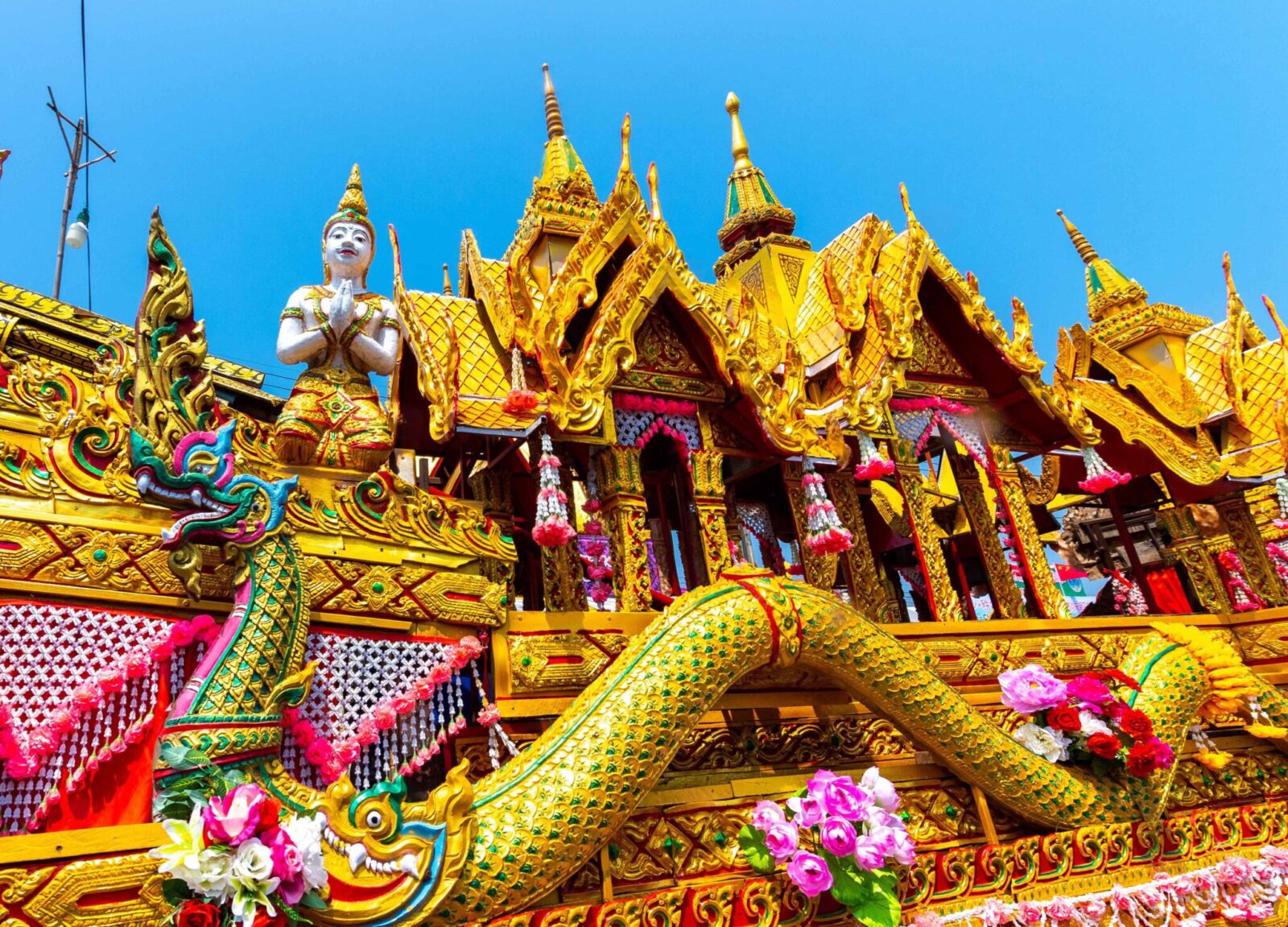
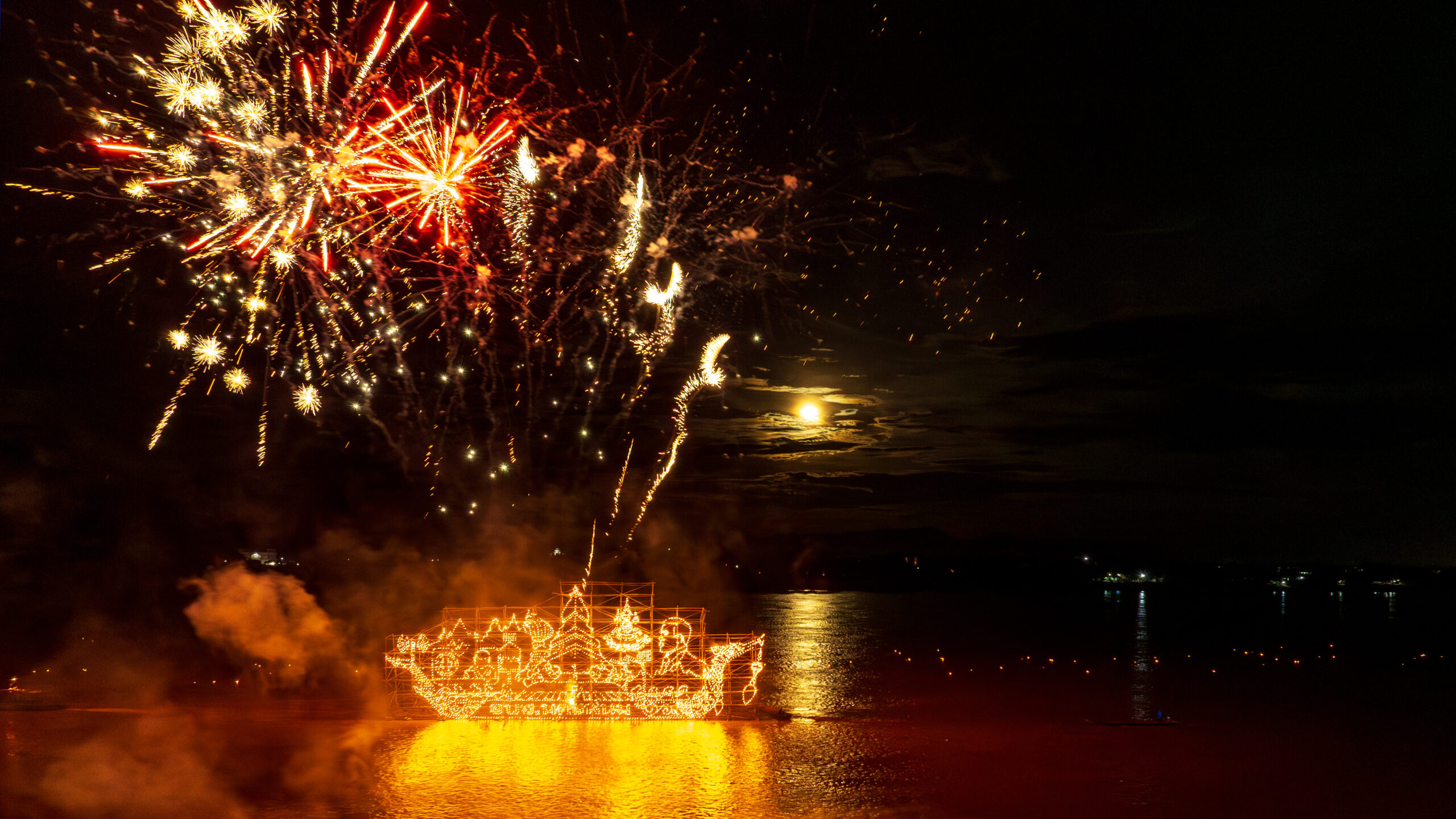
Along the Mekong River in the Northeast, provinces such as Nakhon Phanom and Nong Khai host the Lai Ruea Fai (Procession of Lighted Boats). Villagers build large, decorated bamboo and banana-stalk boats adorned with lanterns, candles, flowers, and paper-cut designs. As the full moon rises, these boats are set afloat on the river to honour the Naga, a mythical serpent believed to dwell in the Mekong. The act represents merit-making, respect for the river spirits, and the symbolic release of misfortunes.
Naga Fireballs of Nong Khai
In Nong Khai, the festival coincides with the appearance of the Naga Fireballs (Bang Fai Phaya Nak) — reddish orbs that rise from the river on Ok Phansa night. While scientific explanations exist, many locals regard this as a spiritual phenomenon linked to the Naga paying homage to the Buddha. The shared anticipation and collective response reflect the community’s close relationship with natural and spiritual worlds.

Thot Kathin – A Final Offering
In the month following Ok Phansa, communities across Thailand observe Thot Kathin, a ceremony in which robes are offered. Processions, often accompanied by music and dance, bring new robes and temple necessities to monks, reinforcing the bond between monastic and lay communities and supporting the continuation of Buddhist teachings.
The End of Lent festivals represent cycles of renewal, generosity, and devotion in Thai Buddhism. Through rituals such as Tak Bat Thewo, Lai Ruea Fai, and Thot Kathin, communities express shared values of dana (generosity), sila (moral discipline), and bhavana (mental cultivation). For travellers, this period offers an opportunity to observe Thailand’s cultural and spiritual heritage in a living context.












Leave a comment