


PATA Reports Steady Tourism Recovery in Asia Pacific, Recording 295.7 Million Visitors in Early 2025
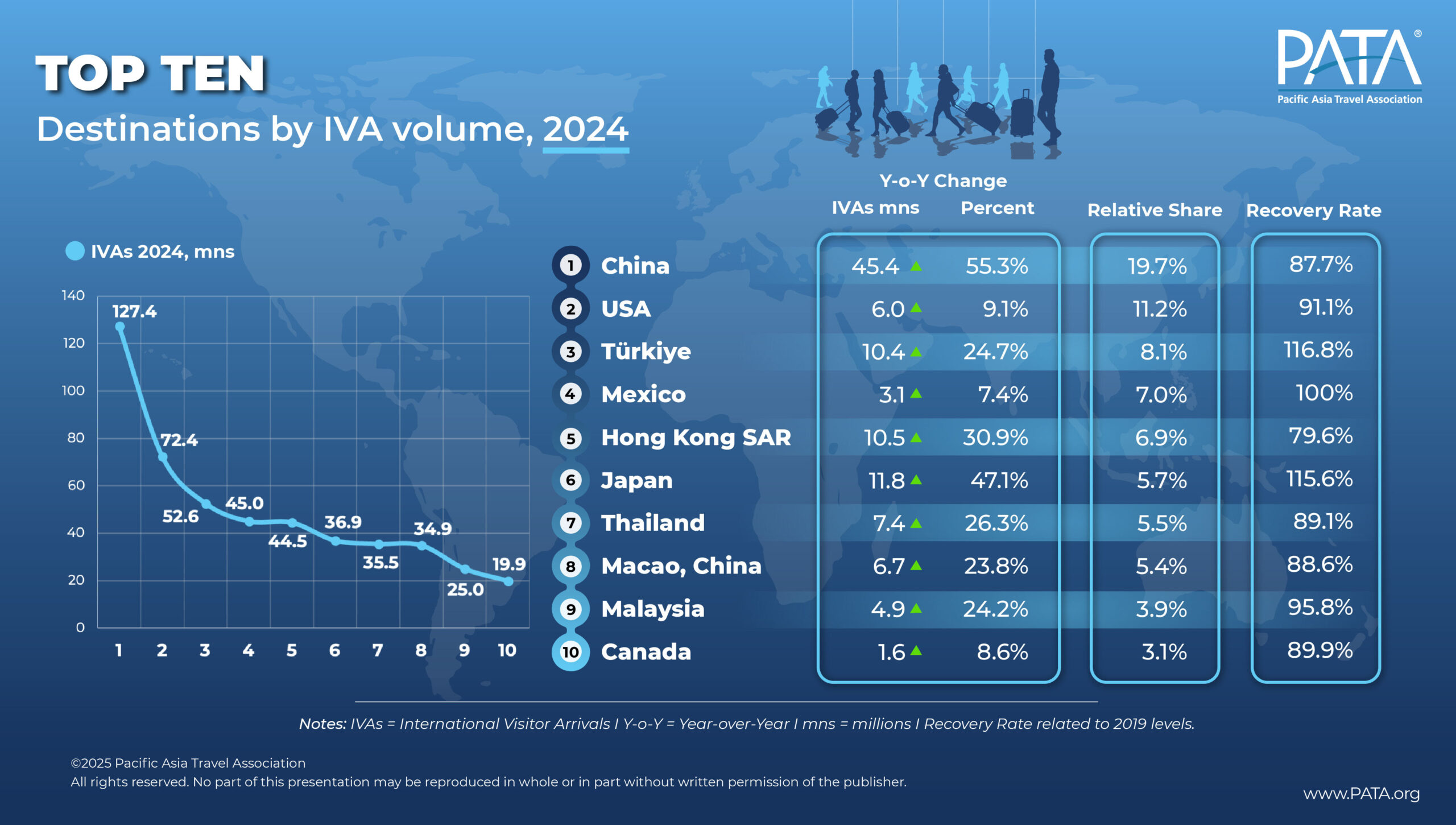
The Pacific Asia Travel Association (PATA) has released its Annual Tourism Monitor 2025, outlining the continued recovery of international visitor arrivals (IVAs) across the Asia Pacific region. According to the report, IVAs in 2024 reached 647.9 million across 46 destinations, reflecting a 24.1% year-on-year increase and a 91.9% recovery compared to pre-pandemic 2019 levels.
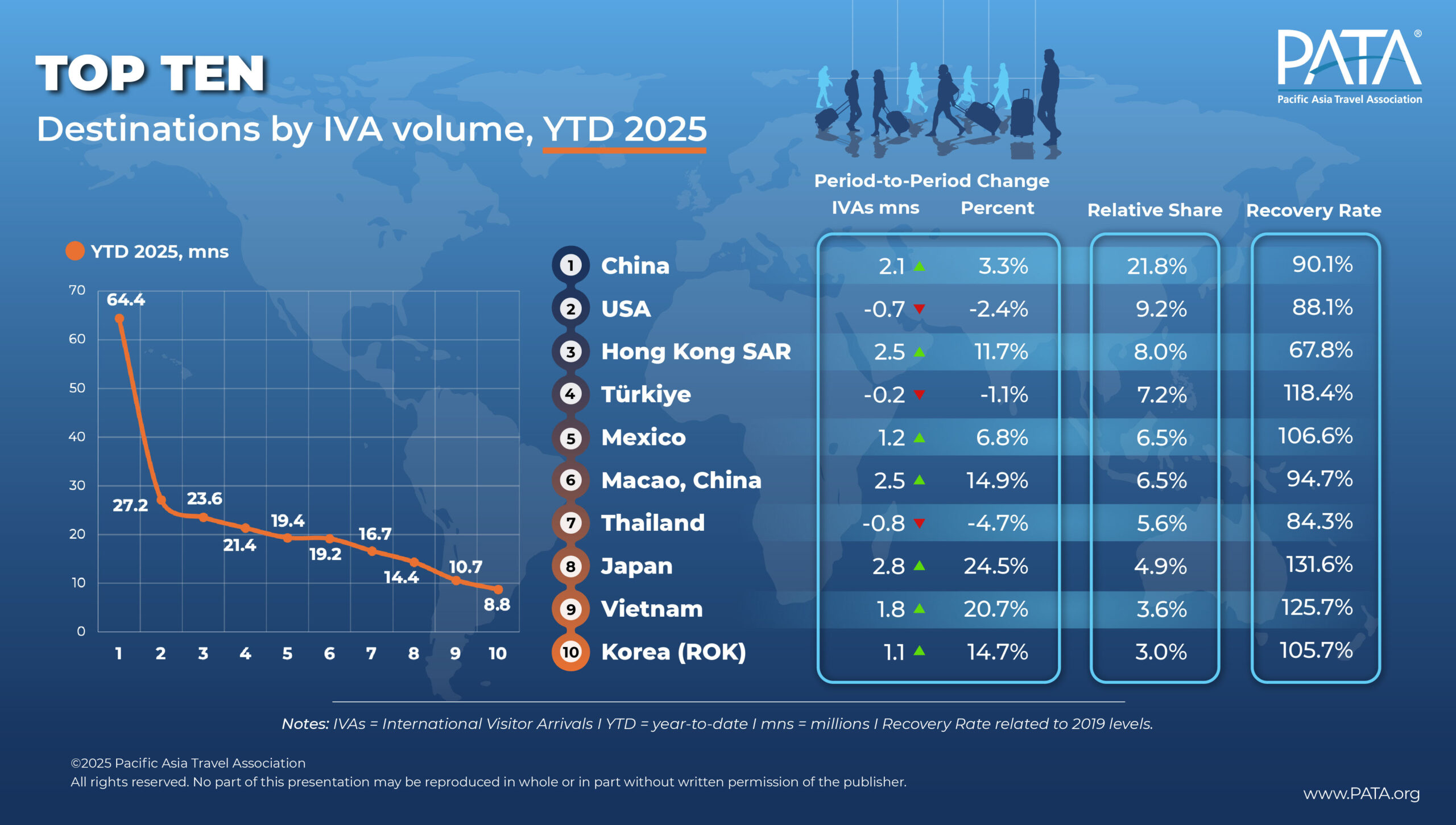
In the first half of 2025, provisional data from Asia Pacific destinations show that IVAs reached 295.7 million, representing a 5.4% increase over the same period in 2024 and a 92.6% recovery compared to 2019. The outlook for the remainder of 2025 suggests a gradual shift toward stable growth.
Regional Highlights
Asia led growth in 2024 with 470.9 million IVAs, accounting for 72.7% of the regional total and marking a 30.7% annual increase. The Americas and the Pacific followed with 153.0 million (up 9.7%) and 24.0 million (up 6.9%) arrivals, respectively.
China recorded over 127 million visitors in 2024, representing 19.7% of the region’s total, while the USA welcomed more than 72 million arrivals (11.2%). Japan registered 36.9 million visitors in 2024, supported by cultural tourism, favourable exchange rates, and improved air connectivity. In the first half of 2025, Japan received 14.4 million IVAs, a 24.5% year-over-year increase, achieving a recovery rate above pre-pandemic levels.
Macao, China, continued its upward trend, attracting 34.9 million IVAs in 2024 (a 23.8% increase) and sustaining growth into early 2025, with a 14.9% rise. Its performance was supported by diversification efforts, infrastructure development, and targeted promotional campaigns.
Emerging Trends and Outlook
In early 2025, Asia accounted for eight of the top ten destinations by visitor volume, with a total of 224.1 million arrivals. The Americas and the Pacific saw 60.5 million and 11.1 million arrivals, respectively.

PATA CEO Noor Ahmad Hamid stated that, while the pace of growth has moderated following the rebounds of 2023 and 2024, the data indicate a stable and sustainable path forward. He noted that the region is transitioning from a phase of recovery to one of resilience and recalibration, reflecting the adaptability of the tourism industry to evolving traveller preferences and market conditions.
Opportunities and Challenges
The Asia Pacific tourism sector continues to find new growth drivers, including:
The expansion of low-cost carriers, which has increased inbound seat capacity to 123.1% of 2019 levels.
The growing role of India as both a source and destination market.
Steady travel demand from North and South America.
However, challenges remain, including the slower outbound recovery of China, structural barriers in the Pacific, such as limited air connectivity and high operating costs, as well as ongoing geopolitical and climate-related risks.
Mr. Hamid emphasized the need for destinations to strengthen market diversification, enhance collaboration between public and private sectors, and invest in long-term environmental and economic sustainability. He noted that adaptability and cooperation will remain key to supporting consistent and inclusive growth across the region.

















Leave a comment