

Luxury Goes Natural: Why Bio-Pools Are Becoming a Hospitality Status Symbol
By: Vikash Kumar, Founder, Biosphere Pools

Most of us have a version of the same water memory from childhood — a river, a lake, a farm pond somewhere, and the feeling of sliding into water that needed no introduction. Clear, cool, alive with small movement. No smell on the skin after. No stinging eyes. You climbed out feeling the same as you went in, except cleaner somehow, and considerably more awake. The chlorinated pool changed that. At the time, it felt like a reasonable exchange. What got left behind, most of us stopped thinking about.
Why Bio-Pools Are Becoming a Hospitality Status Symbol

Bio-pools are bringing it back. The setting for that return is the luxury hospitality market.
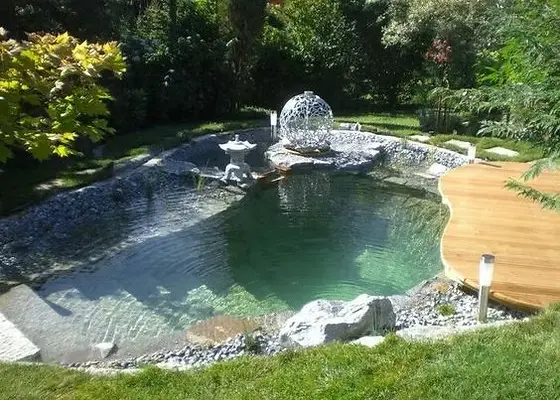
The bio-pool is not a sentimental gesture toward nature. It is an engineered water system that filters itself through living ecology. Aquatic plants and beneficial bacteria do the filtration work across two distinct zones — a swim area and a planted regeneration area, where water cleans itself continuously. The confusion with decorative garden ponds is understandable but misplaced. This water is clear, swim-grade, and held to the same standards as any well-run conventional pool. The water is clear and safe, and the feeling of being in it is precisely what that childhood memory has been holding onto. Getting there takes genuine engineering, not proximity to a river.

Farm-to-table dining arrived when a certain kind of guest stopped reading provenance as a footnote and started reading it as the entire point. Natural wine followed. So did regenerative travel and the quiet retreat from properties that stage luxury without living it. The pool deck is where that same shift has arrived last. What the infinity edge communicated in the early 2000s — architectural ambition, a property that understood aspiration — the bio-pool communicates now with considerably more behind it. It tells a guest that the people who built this place understood the land well enough to leave most of it alone.
The natural swimming pool movement began in Austria in the 1980s, when cultural engineer Werner Gamerith built the first schwimmteiche in his own garden. The concept spread through Germany and across Europe, and today the continent holds an estimated 20,000 natural swimming pools. Luxury hospitality absorbed it early. Bio-Hotel Stanglwirt in Kitzbühel has built its entire character around the land it sits on for over a century. Schloss Elmau in Bavaria positions its Nature Spa beside the rushing Ferchenbach mountain creek, treating the surrounding landscape as the amenity itself. For European luxury properties, the bio-pool has long since stopped needing to make a case for itself.

India is roughly fifteen to twenty years behind that curve, but the hospitality market here is asking the same questions now that Alpine properties were asking in the early 2000s. Projects in the coffee estate country of Sakleshpur and naturalistic luxury properties across South India are beginning to arrive at an uncomfortable realisation: why is the most considered experience at a premium property still a chemically maintained tank?
Global wellness tourism crossed USD 1 trillion in 2024 and is projected to approach USD 3 trillion by 2033. Within India, the sector is forecast to reach USD 43.76 billion by 2031, backed by the government’s Heal in India initiative and a dedicated USD 2.2 billion allocation to position the country as a global wellness destination. Guests arriving at premium properties today arrive differently from before. They want to know what is in the water, what the property around them was built to do, and whether leaving will feel better than arriving. A bio-pool answers those questions before anyone thinks to ask them.
Research by Interface and Terrapin Bright Green found that rooms with a water view command up to 18% more in average daily rate, and guests spend 36% longer in lobbies that incorporate biophilic elements. A bio-pool changes how an entire property feels, which is something a water view cannot do on its own. It also generates something that marketing budgets rarely produce reliably. The guest who photographs a dragonfly on a lily pad before breakfast and shares it with three hundred people is responding to something real. That kind of response is not manufactured, and it shows.
The properties that invest in properly engineered systems now, not decorative approximations of them, will hold a position that takes years for others to close. The early adopters in Alpine hospitality made this decision two decades ago and still trade on it. That window has a shelf life.
Somewhere between the childhood pond and the hotel pool, something was lost. The best hospitality design of this decade is quietly working out how to return it.












Leave a comment